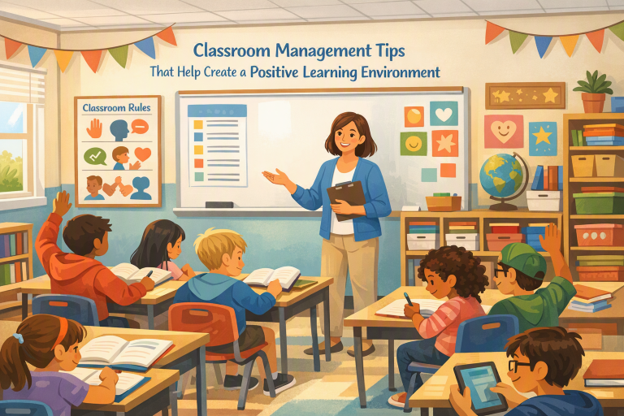
Classroom management is one of the most important parts of teaching, but it is also one of the most challenging. A well-managed classroom is not about having perfect students or controlling every moment. It is about creating a space where students feel respected, expectations are clear, and learning can happen with fewer distractions.
Strong classroom management begins before problems happen. Research-supported approaches such as positive behavior supports emphasize being proactive, building relationships, teaching expectations, and reinforcing the behaviors students need to succeed.
Set Clear Expectations Early
Students need to know what success looks like in your classroom. Instead of assuming they understand your rules, take time to teach and model them. Explain what respectful listening, group work, transitions, technology use, and independent work should look and sound like. When expectations are clear, students are more likely to meet them.
Build Relationships Before You Need Correction
Students are more likely to respond positively to correction when they know their teacher cares about them. Simple actions such as greeting students at the door, learning about their interests, using their names, and noticing their effort can make a big difference. Relationship-building does not eliminate every behavior challenge, but it creates trust that makes classroom management easier.
Create Consistent Routines
Routines help students feel secure because they know what to expect. Procedures for entering the room, turning in work, asking for help, moving into groups, and ending class should be practiced until they become habits. The more predictable your classroom routines are, the less time you have to spend redirecting behavior.
Use Positive Reinforcement
Positive reinforcement helps students understand which behaviors should continue. This can be as simple as giving specific praise, acknowledging effort, or privately recognizing a student who made a good choice. Instead of saying, “Good job,” try saying, “I noticed how you started your assignment right away and stayed focused.” Specific feedback teaches students exactly what they did well.
Respond Calmly and Consistently
Every teacher faces difficult moments. When behavior issues happen, a calm response is usually more effective than an emotional one. Use a steady voice, give brief reminders, and follow through with the same expectations for everyone. Consistency helps students understand that classroom expectations are fair and predictable.
Reflect and Adjust
Classroom management is not one-size-fits-all. What works for one group of students may need to be adjusted for another. If a routine is not working, ask yourself what students may need: clearer directions, more practice, a shorter transition, a visual reminder, or a different seating arrangement. Reflection helps teachers respond to behavior as communication rather than simply reacting to problems.
Final Thoughts
Effective classroom management is not about perfection. It is about creating a positive, structured, and supportive environment where students can learn and teachers can teach. By setting clear expectations, building relationships, practicing routines, and responding with consistency, educators can create classrooms where students feel safe, valued, and ready to grow.
 Teaching Tips for the Modern Classroom
Leave a comment